The Essential Guide to Fire Alarm Systems
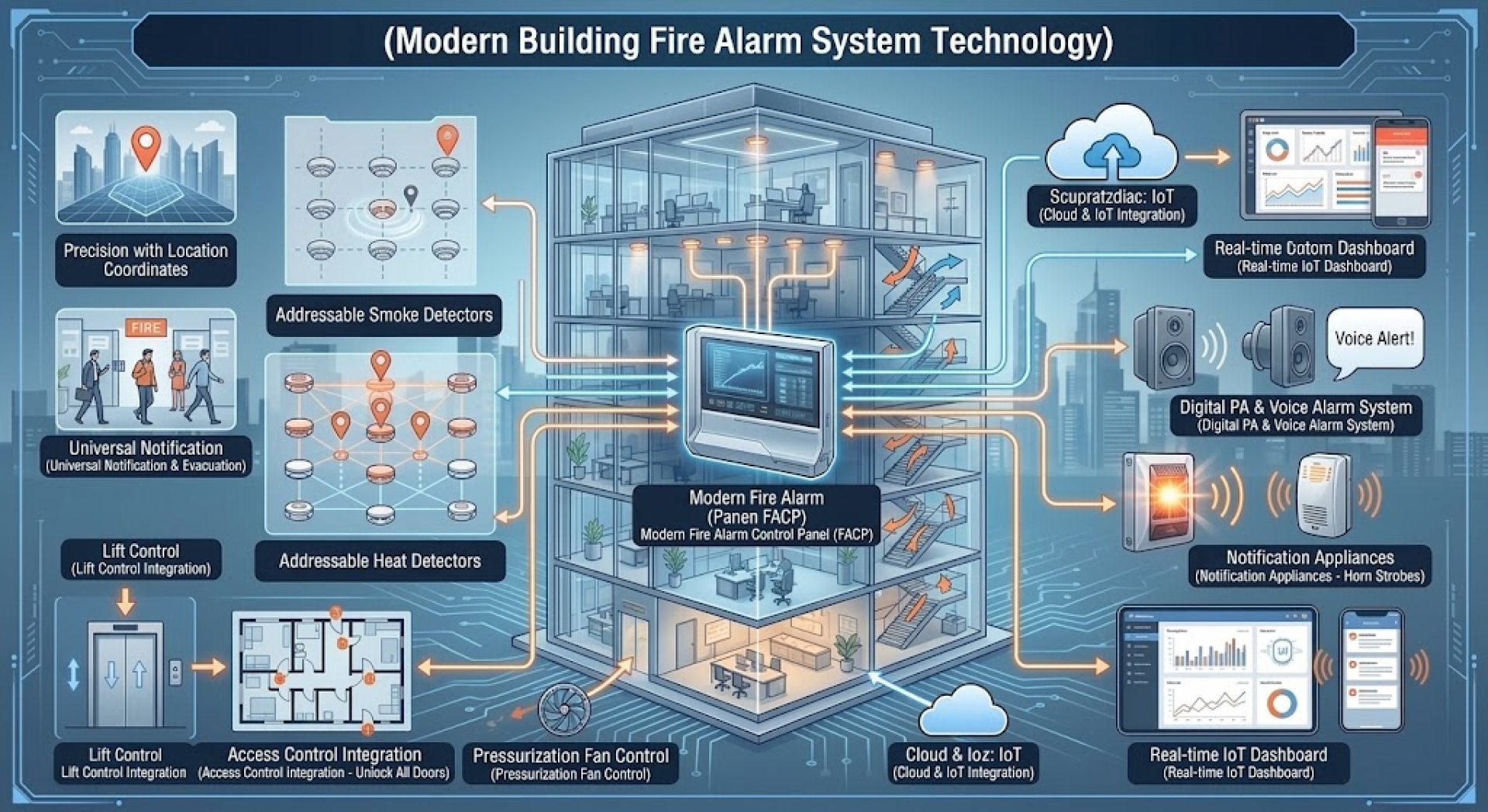
The Essential Guide to Fire Alarm Systems: Safety, Standards, and Modern Integration
A Fire Alarm System is the critical foundation of any building's life safety strategy. Designed to detect the early signs of a fire, alert occupants, and initiate emergency responses, these systems are indispensable for minimizing property damage and saving lives. Understanding the components, regulatory standards, and technological advancements of fire alarm systems is essential for building owners, facility managers, and safety engineers.
Regulatory Standards and Compliance
The design, installation, and maintenance of fire alarm systems are strictly governed by international and local codes. Globally, the National Fire Protection Association (NFPA), particularly NFPA 72 (National Fire Alarm and Signaling Code), sets the benchmark for fire safety.
In Thailand, these systems must also comply with the Engineering Institute of Thailand (EIT) standards and the Building Control Act. These regulations mandate that high-rise buildings, large-scale commercial facilities, and public spaces must be equipped with fully functional, continuously monitored fire alarm systems that feature backup power supplies capable of sustaining the system during electrical outages.
Core Components of a Fire Alarm System
A legally compliant and effective fire alarm system consists of several interconnected components working seamlessly together:
Fire Alarm Control Panel (FACP): The central processing unit of the system. It monitors the status of all input devices, activates output devices upon detection, and provides system diagnostics.
Initiating Devices (Detectors): These are the sensors that detect the presence of fire.
- Smoke Detectors: Used in general areas like corridors and offices to detect combustion particles.
- Heat Detectors: Installed in areas where smoke or steam is normally present, such as kitchens, parking garages, or mechanical rooms.
- Manual Pull Stations: Strategically placed near exits, allowing occupants to manually trigger the alarm upon discovering a fire.
Notification Appliances: The devices designed to alert occupants. These include loud alarm bells, sirens, and horn strobes (audible and visual alerts) to ensure that warnings are clear, even in high-noise environments or for hearing-impaired individuals.
Evacuation Protocols and Notification Strategies
Effective evacuation relies on clear and organized notification. Modern systems utilize "zoning" to manage evacuations in large or high-rise buildings safely. Instead of triggering a general alarm that could cause panic and overcrowd emergency stairwells, the system typically alerts the fire floor, the floor directly above, and the floor directly below first.
Advanced facilities also integrate Public Address (PA) and Voice Alarm systems. These systems provide automated, pre-recorded verbal instructions, guiding occupants to the nearest safe exits calmly and efficiently.
Modern Technology and Smart Building Integration
The landscape of fire safety has been transformed by smart building technologies. Traditional "Conventional Systems," which could only identify a fire within a broad zone, are rapidly being replaced by "Addressable Systems." Addressable technology allows the FACP to pinpoint the exact location of a triggered detector, drastically reducing response times for emergency personnel.
Furthermore, true modern safety lies in system integration. Today’s advanced Fire Alarm Systems communicate directly with other building management systems to automate critical emergency responses:
- Access Control Integration: Automatically unlocking all electronic doors and turnstiles to ensure unimpeded evacuation routes.
- Elevator Recall: Automatically sending elevators to a designated safe floor and disabling them to prevent occupants from using them during a fire.
- HVAC Control: Activating pressurization fans in stairwells to keep them smoke-free, while shutting down general air conditioning to prevent the spread of toxic smoke.
With the rise of IoT (Internet of Things) and Cloud technologies, facility managers can now monitor the real-time status of their fire alarm systems, receive instant alerts, and diagnose faults remotely via mobile dashboards.
Investing in a high-quality, fully integrated fire alarm system is no longer just about legal compliance; it is a fundamental commitment to safeguarding human life and securing assets against unpredictable disasters.
